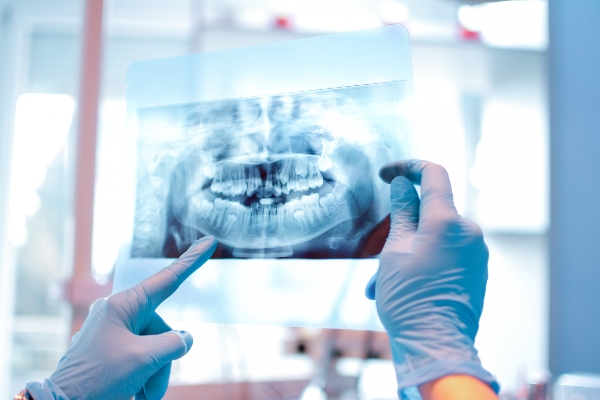
 Patients are always curious about the newest advances in dentistry. One of these recent advancements is digital X-rays, which many dentists now use. Patients may have some questions about this new technology so we will answer them here!
What are digital X-rays?
Digital X-rays are dental imaging that helps diagnose problems with teeth, jaws, and other mouthparts. The images show the hidden structures inside your mouth in detail. With these detailed images, dentists can see cavities or other problems without invasive procedures like taking an oral exam under anesthesia.
The best part about this new technology is that it's fast! Rather than waiting for days for film processing to happen, you get instant results on a computer screen while still in the office. What's more, digital X-ray machines use less radiation than traditional films, so they're safer too.
How much radiation do digital X-rays use?
Digital X-ray machines emit deficient levels of radiation and are safe to use. The typical patient will be exposed to less than 50% of what they receive from a single chest X-ray! You can rest assured that your dentist will not be taking X-rays when they are not necessary for treatment! It's also important to remember that we only take dental radiographs as needed.
So, what's the bottom line? Digital radiographs have many benefits over traditional films, including reduced radiation exposure and faster images. While there is no current evidence that digital radiographs cause any harm to patients or dental professionals, it is always good to know what you are getting into. If the dentist is unsure whether they should take a dental radiograph, it's usually best to go with the digital x-ray option if possible.
What are the benefits of digital X-rays?
Digital X-rays make it easier to diagnose problems quickly. Since they're faster than traditional films, you spend less time in both the waiting room and treatment chair!
Digital images can be shared instantly with other dental professionals if needed so that doctors can coordinate your care, leading to a more efficient, effective team approach. Best of all, digital X-rays use less radiation than older film technology, so you're exposed to fewer carcinogens and other harmful chemicals that can raise your risk for cancer down the line.
What is a lead bib?
A lead bib is a small sheet that covers the patient's chest and stomach. Sometimes, patients are required to wear this during x-rays to help protect their soft tissues from excess radiation exposure. We insist on lead bibs for all our patients because it increases safety in the office by keeping harmful rays away from sensitive areas like your heart and lungs.
What is the difference between a panoramic X-ray vs. traditional X-rays?
Traditional dental films are two-dimensional, meaning they give a flat view of your mouth on film. The images can be hard to interpret if you have trouble seeing subtle changes in tooth structure or jaw alignment that might indicate problems.
Panoramic X-rays are three-dimensional, so they show more of the mouth in one image. This makes it easier for dentists to spot issues that might be hidden in traditional films, leading to earlier detection and treatment.
Can I get dental implants with this new technology?
Yes! Patients can benefit from having their teeth replaced or augmented through a process called implant dentistry. Dental implants are an excellent way to restore your smile since they can replace missing teeth completely with beautiful new permanent crowns. Dental implants are also ideal for patients who need a bridge or partial denture replacement because the metal post in their jaw acts as an anchor onto which artificial teeth can be attached.
Request an appointment or call Plainview Dental at 516-255-6716 for an appointment in our Plainview office.
Related Posts
Implants are one of the various restorative procedures that a dentist can carry out. They can be inserted as a single unit to replace a tooth. They can also be a component of bridges to replace more than one missing tooth side-by-side. In addition, implant dentures help replace the entire dentition on either one or…
Dental implants are a common solution to replace missing teeth. A dentist often recommends this procedure because there are numerous benefits when compared to other replacement options. No matter how many teeth a patient is missing, implants may be an effective treatment.Common candidates for implants are those missing one or more teeth. They may be…
The field of dentistry has become so advanced that cavities are no longer the taboo subject they once were. Though uncomfortable and inconvenient, cavities are easily treatable via a few common, non-invasive procedures. Dentists can even treat some of the most severe cases of decay in single appointments. Given this fact, it makes little sense…